
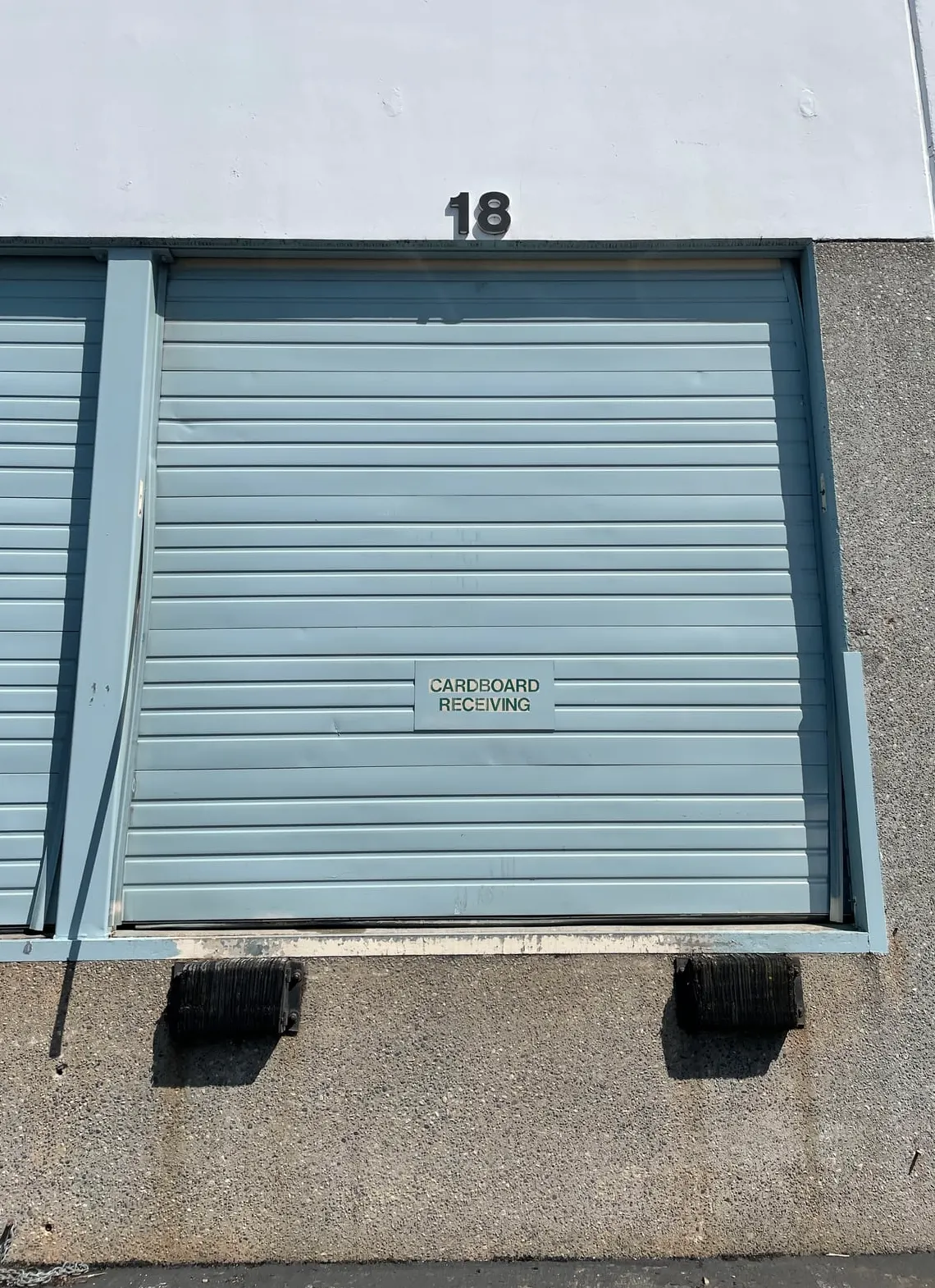
The One Rule That Settles This
If a door cycles dozens of times a day and is built to survive a forklift bump, it's commercial — and it does not follow the same rules as the door on your house. That's the short version. The longer version has a few exceptions worth knowing before you settle the argument for good.
Exception one: a detached workshop, barn, or oversized garage on a residential property can use a door that's closer to commercial-grade in weight and gauge, even though the building is technically a home. Exception two: if you run a business out of a converted garage — a landscaping company, a small auto shop, a storage operation — your insurance or your own common sense might call for commercial-grade hardware even though the structure is residential. So "commercial vs. residential" is really about how hard the door works, not just what kind of building it's attached to.
What Actually Makes a Door "Commercial"
A few things separate a true commercial or warehouse overhead door from the one most homes have:
- Cycle count: A residential door might open and close a handful of times a day. A commercial door at a loading dock or shop can cycle dozens of times in a shift, which is why the springs, rollers, and track are rated for far higher use.
- Spring systems: Commercial doors often use heavier torsion springs, sometimes with a second spring as a backup so the door doesn't slam if one fails mid-use. Residential doors usually run on a single torsion spring sized for the door's weight, not for constant cycling.
- Material and gauge: Commercial doors are typically built from thicker steel, sometimes with reinforced end panels to handle impacts from equipment or vehicles.
- Opener horsepower: A residential opener is built for a door that moves occasionally. Commercial operators are rated for continuous or frequent duty and often include manual chain hoists as a backup when power or the motor fails.
- Safety hardware: Photo-eye sensors and safety edges are standard on both, but commercial doors frequently add extra interlocks and warning devices because of how many people and vehicles move through the opening.
Why the Maintenance Schedule Isn't the Same
This is where the argument usually lives. A residential door generally does fine with a seasonal check — lubrication, hardware tightening, a look at the springs and cables once or twice a year. A commercial or high-cycle door needs attention far more often, because it's wearing out parts on a different timeline:
- Rollers and hinges need lubrication more frequently when a door cycles dozens of times a day instead of a handful.
- Cables and springs should be inspected on a shorter interval since fatigue builds up faster under heavy use.
- Weatherstripping and bottom seals on loading-dock style doors take more abuse from constant opening and from whatever is driven or rolled through them.
- Opener components — chains, gears, limit switches — simply see more hours of run time and need checking more often.
None of this means a homeowner's door needs commercial-level attention. It means the two shouldn't be judged by the same checklist.
Where the Local Weather Complicates Things
Humid summers in this area are hard on any exposed steel hardware — springs, hinges, and tracks can start to show surface rust faster than people expect, especially on heavier-gauge commercial doors that have more metal exposed. Icy winters add a different problem: larger doors have more surface area for ice to form along the bottom seal and track, which can make an already heavy door even harder on its opener. Heavy rain and the occasional coastal storm put real stress on bottom seals and weatherstripping, which matters even more on a loading-dock style door that's opened and closed throughout a storm. If you've got a detached workshop or outbuilding with a heavier door, it's worth treating that door's hardware with the same winterizing attention you'd give the one on the house.
The Workshop and Home-Business Exception
If the argument started because someone turned a garage into a business space, or built out a workshop with a bigger, heavier door than a typical house has, this is the gray area. The building is residential, but the door's workload might not be. In that case, it makes sense to maintain it on a commercial-style schedule — more frequent inspections, closer attention to spring fatigue, and an opener sized for the actual use rather than just the door's weight.
When to Call Herndon Garage Door
If you're not sure whether your door — house, workshop, or home business — is set up and maintained correctly for how hard it actually works, that's worth a second opinion. Herndon Garage Door can walk through a Garage Door Maintenance visit to check spring tension, hardware wear, and seals against the real cycle count of your door, not a generic schedule. If it turns out the door itself is undersized or outdated for the job, our Garage Door Installation team can talk through options built for heavier daily use.
Settle the argument and get a professional opinion at the same time — call Herndon Garage Door today to schedule a visit anywhere in Herndon, VA and the surrounding area.