
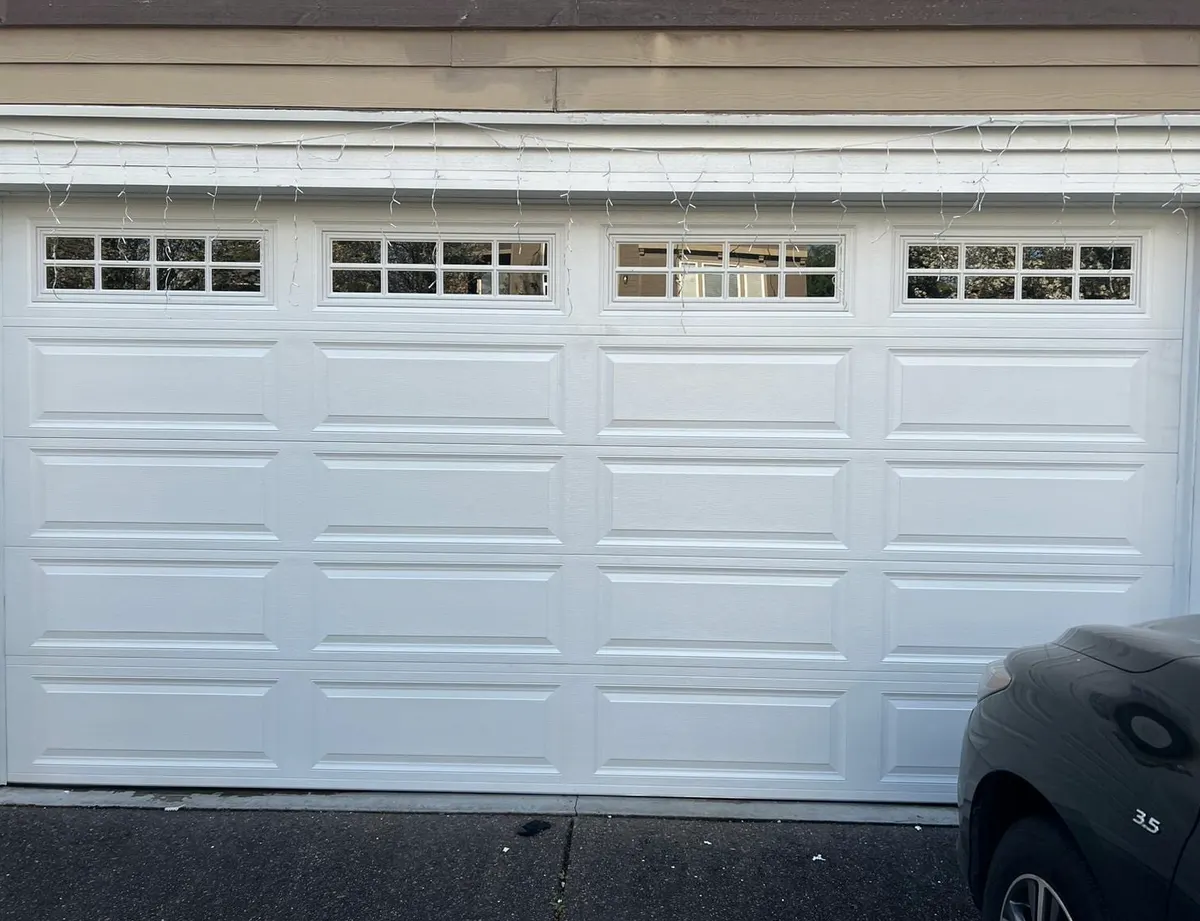
The One-Sentence Answer
A garage door is one of the few exterior upgrades that reliably pays you back in both curb appeal and resale value — but only if it matches the house and nothing else on the front of the home is dragging the whole picture down.
That's the rule of thumb. Here are the exceptions that matter before anyone spends money: if the roof, siding, or driveway are visibly tired, a new garage door just highlights the contrast instead of fixing the problem. If the current door is structurally sound and only needs cleaning, new hardware, or a repaint, replacement is overkill. And if the house is modest for the block, an elaborate carriage-style door with glass panels can look like it belongs on a different home entirely — buyers notice when something feels mismatched, even if they can't say why.
Why the Garage Door Carries So Much Visual Weight
On a lot of homes — especially newer construction where the garage faces the street — the garage door is the single largest visible feature on the front of the house. It can easily account for a third or more of what someone sees when they pull into the driveway or view listing photos. That's a lot of visual real estate for one surface, which is exactly why an outdated, dented, or faded door does more damage to first impressions than almost anything else on the exterior.
The area's mix of older and newer housing makes this more complicated than it sounds. Older homes often have narrower, single-car-width doors or slightly awkward proportions that were standard decades ago but look dated now. Newer construction tends to have wide, double-width doors that dominate the façade even more — which means the style and color choice carries extra weight. A door that works on one home type can look wrong on the other.
What Actually Moves the Needle
Buyers and neighbors respond to a handful of specific things, not vague "newness":
- Proportion and style matching the house era — a flat, simple panel door suits a traditional colonial; a door with more horizontal lines or minimal hardware suits a more modern build.
- Color that complements the trim and siding, not just whatever was popular at the store that week.
- Clean, tight installation — no visible gaps, no sagging panels, no mismatched weatherstripping. A door that fits poorly looks cheap even if the material isn't.
- Hardware details like handles or decorative hinges, used sparingly. A little goes a long way; too much reads as costume rather than craftsmanship.
What Doesn't Help As Much As People Think
Smart glass windows, elaborate faux-wood finishes, and premium insulation ratings matter for comfort and energy bills, but they rarely move a buyer's first impression the way basic proportion and color do. Spending extra for top-tier insulation on a door that's crooked in its frame or painted an odd color is solving the wrong problem first. Fix the fundamentals — fit, color, proportion — before upgrading the extras.
The Weather Factor Nobody Puts in the Spreadsheet
This is the part that gets missed in a quick curb-appeal conversation: the climate here is hard on garage doors over time, and that affects long-term appearance, not just function. Humid summers can warp wood or wood-composite doors if they aren't properly sealed, leaving visible gaps or bowing within a few years. Icy winters stress poorly insulated steel panels, sometimes cracking seals or causing condensation that leads to rust streaks along the bottom. Heavy rain and occasional coastal storms push water up against the bottom panel and threshold, which is where cheaper doors show wear first — flaking paint, rust spots, or a bottom seal that's visibly deteriorated within a couple of winters.
In other words, a door that looks great on installation day but wasn't built or sealed for this climate can look tired again faster than expected, which undercuts the resale benefit you paid for. Material and weatherproofing quality matter just as much as style when the goal is value that holds up.
Repair, Refresh, or Replace?
Before deciding, walk through this in order:
- Is the door structurally sound, opening and closing smoothly, with no major dents or rot? If yes, a cleaning, repaint, and new weatherstripping might solve the appearance issue for a fraction of replacement cost.
- Is the style or proportion clearly out of step with the house — too narrow, outdated, or mismatched in color? That's a replacement conversation, not a repair one.
- Is the door showing weather damage — rust, warping, cracked panels, failed seals? Replacement is usually the better long-term value, since repairs on weather-damaged doors tend to be temporary.
When to Call Herndon Garage Door
If you're trying to decide between refresh and replace, that's exactly the kind of call worth making before buying anything. Herndon Garage Door can assess whether your current door's hardware, panels, and seals are solid enough for a lower-cost refresh, or whether a full Garage Door Installation makes more sense given its age and condition. If the door itself is fine but it's underperforming through the seasons — drafts, condensation, or slow operation in the cold — our Garage Door Maintenance service can often extend its life and improve how it looks and runs without a full replacement.
If you're weighing a new door for your home in Herndon, VA — or anywhere from Reston to Great Falls — give Herndon Garage Door a call. We'll give you a straight answer about what your house actually needs, not just what's easiest to sell.