
The short answer
Your garage door is the largest opening in your home's exterior wall, and it's the one wall that moves. When high wind hits a house, the garage door is usually the first thing to fail — not the roof, not the windows. If it buckles or blows in, wind pressure can get inside the structure and push up on the roof from underneath, turning a bad storm into a much bigger repair. Checking and reinforcing your door before this season's wind and rain events is one of the cheapest, most effective things you can do to protect the rest of the house.
Why this is the season that matters
Late fall into winter in this part of Virginia brings a mix of heavy rain, gusty fronts, and occasional remnants of coastal storms pushing inland before the deep freeze sets in. Wind loads on a garage door spike during these events, and the same storms often bring enough rain to expose weak seals and drainage problems around the door opening. Once the icy stretch of winter arrives, a door that's already been stressed by wind and water is more likely to bind, crack, or fail outright when temperatures drop and hardware contracts.
Why a garage door is a structural weak point
A standard residential garage door is a large, thin, hinged panel system held in place by tracks, rollers, and a relatively light frame compared to a load-bearing wall. Under wind pressure, a few things can happen:
- Panel flex and buckling — thinner or older steel/wood panels can bow inward or outward under sustained gusts, especially without reinforcement.
- Track separation — wind pressure plus age-weakened rollers can pop the door out of its tracks, especially on doors with worn or rusted hardware.
- Pressure differential — if the door fails and wind gets inside the garage, the sudden pressure change can stress the roof structure and attic framing from the inside.
- Water intrusion — gaps from worn weatherstripping let wind-driven rain in, which can damage stored belongings, warp wood doors, and rust tracks and springs over time.
Homes with older, lighter-gauge doors or doors that have never had wind bracing added are more exposed. Newer construction in more open subdivisions can also catch more direct wind than homes tucked behind mature trees, so exposure varies even block to block.
What to check before the next storm
Tracks, rollers, and hardware
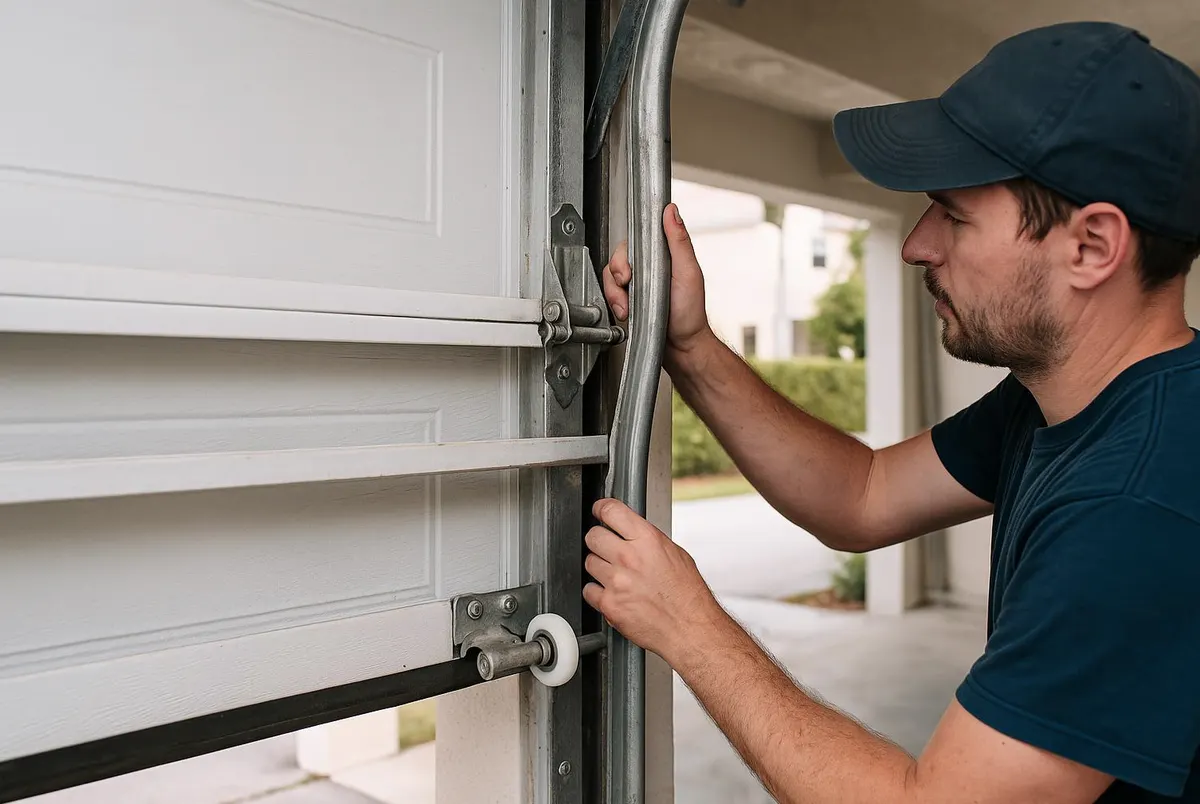
Walk the full length of both tracks and look for rust, dents, or gaps where the track has pulled away from the frame. Spin the rollers by hand — they should turn freely without wobble. Tighten any loose bolts on the track brackets and hinges; vibration from regular use loosens these over time, and a loose bracket is exactly what gives way under wind load.
Weatherstripping and bottom seal
Check the rubber seal along the bottom of the door and the vinyl strips along the sides and top. If they're cracked, flattened, or pulling away, water and wind will find the gap. Replacing seals is inexpensive and one of the most effective ways to cut down on wind-driven rain getting into the garage.
Springs and balance
Disconnect the opener and lift the door manually about halfway. It should stay in place on its own. If it drifts up or falls, the springs are losing tension — a door with weak springs puts more strain on the opener and tracks during wind gusts, since the opener is doing work the springs should be handling.
Panel condition and bracing
Look at the inside of the door for any horizontal reinforcement struts. Doors without them, particularly wider double-car doors, are more prone to bowing under wind pressure. Adding horizontal bracing is a retrofit that reinforces an existing door; replacing the door entirely with a wind-rated model is a bigger investment but is worth considering for homes in more exposed locations or with an aging door that's due for replacement anyway. National price ranges for either option vary widely depending on door size and material, so it's worth getting bracing and full replacement quoted side by side.
Opener and backup power
Storms that bring high wind often bring power outages too. Test that your opener's manual release works smoothly in case you lose power and need to open the door by hand, and if your opener has a battery backup, confirm it's holding a charge.
Drainage around the opening
Heavy rain combined with wind pushes water sideways against the door. Make sure the grading and any gutters near the garage are directing water away from the slab, not pooling it against the threshold where it can seep under the door and into the garage floor.
When to call Herndon Garage Door
If you find rusted or bent tracks, a door that won't hold its position when lifted halfway, or panels that flex noticeably when you press on them, those aren't things to wait on — they tend to fail at the worst possible moment, mid-storm. Our Garage Door Maintenance service covers a full inspection of tracks, rollers, springs, and seals so small issues get caught before a wind event turns them into a bigger repair. If springs are already worn or the balance test fails, our Spring Replacement service restores proper tension so the door and opener aren't fighting gravity during a storm. And if a door does fail during bad weather, our Emergency Garage Door Service is there to get it secured and repaired quickly.
If you're in Herndon, Reston, Sterling, Ashburn, Chantilly, Centreville, Great Falls, or Vienna and want your garage door checked before the next round of wind and rain, give Herndon Garage Door a call — we'll get it inspected, tightened up, and ready for whatever this season brings.