
The Moment You Notice It
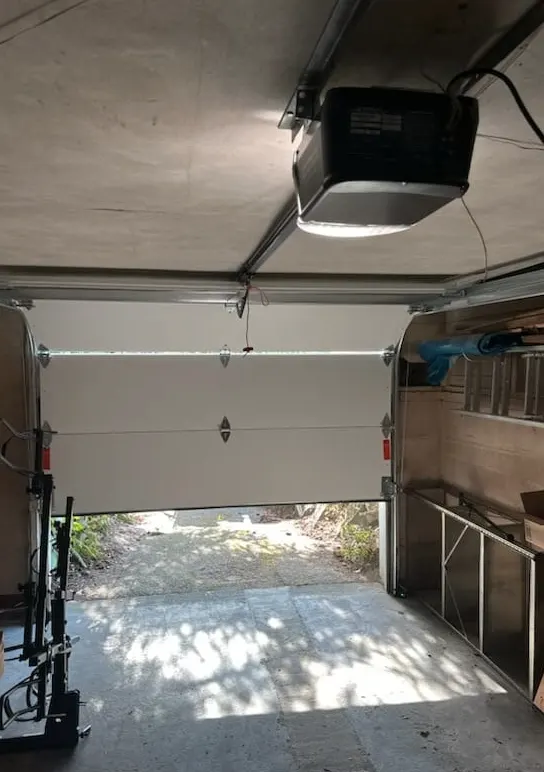
You hit the button and the garage door starts down, then stops a few inches from the floor and jerks back up. Or it never moves at all — you just hear a click and see a small light on the opener motor blinking in a steady pattern. You check the remote batteries, you check the track, everything looks fine. The real culprit is usually a pair of small plastic eyes mounted low on each side of the door track, about six inches off the garage floor. These are the photo-eye safety sensors, and when they can't see each other, your door won't close. That's not a malfunction — that's the system doing exactly what it's supposed to do.
What the Photo-Eyes Actually Do
Each sensor bracket holds a small transmitter and receiver. One side sends an invisible infrared beam across the garage door opening; the other side receives it. As long as that beam is unbroken, the opener knows the path is clear and will let the door close. If something breaks the beam — a box, a pet, a person, a bike leaned against the wrong spot — the door reverses immediately. It's a federally mandated safety feature that has prevented countless injuries and worse since the 1990s, and it only works if the sensors are aligned and clean.
Why They Trip More Than People Expect
Photo-eye problems are rarely dramatic. They're usually caused by small, cumulative things:
- Misalignment: A bump from a car bumper, a stored bike, a dropped ladder, or even normal settling of an older garage can nudge one bracket out of position by just a few degrees — enough to break the beam.
- Dirt and cobwebs: Garages collect dust, pollen, and spiderwebs on the sensor lenses, especially in garages that see a lot of lawn equipment traffic or sit near wooded lots common in this area.
- Condensation: Humid summer air meeting a cooler concrete floor can fog the lenses, and the same thing happens in reverse during icy winter mornings when warm garage air meets a cold sensor housing.
- Standing water or road grime: Heavy rain and storm runoff can splash the sensors if they sit low near a sloped driveway, leaving a film that scatters the beam.
- Direct sunlight: Low winter sun angling straight into the receiver eye can wash out the signal for a few minutes a day, usually explaining a door that only misbehaves at certain times.
How Badly This Can Go Wrong
A tripped sensor that just refuses to close is an inconvenience. The bigger risk is the opposite failure: sensors that appear to work but don't actually reverse the door when something is in the way. This happens when a sensor is aimed just enough off-center that it still occasionally syncs, giving you false confidence. A door that closes on a car bumper, a pet, or a person because the safety reversal didn't fire is a serious injury risk, not a minor repair issue.
Cleaning and Aligning Them Yourself
- Wipe each lens gently with a soft, dry microfiber cloth — no glass cleaner, which can leave a film.
- Check that both brackets sit at the same height and are both pointed directly at each other, not angled up, down, or sideways.
- Loosen (don't remove) the wing nut or screw on each bracket, nudge gently, then retighten once the opener's indicator light goes solid on both sides.
- Clear anything stored near the sensor's line of sight, including seasonal items that tend to pile up near the walls in colder months.
- Test by waving a broom handle through the beam while closing — the door should reverse immediately.
When Not to Bypass Them
A common shortcut circulating online is taping down the wall button or using a jumper wire to force the door closed without a working photo-eye. This disables the reversal safety feature entirely. The door will close on anything in its path with full force, no exceptions. If your sensors are failing repeatedly, the fix is alignment, cleaning, or replacement — never disconnection.
When to Call Herndon Garage Door
If you've cleaned and aligned the sensors and the door still won't cooperate, the wiring, the sensor units themselves, or the opener's logic board may be at fault. Herndon Garage Door can diagnose and correct photo-eye and opener issues as part of a standard Garage Door Repair visit, and routine Garage Door Maintenance catches misalignment and wiring wear before it becomes a safety failure.
If your door is slamming down without reversing, that's not a wait-and-see situation — call Herndon Garage Door today and get it looked at before it's someone's hand or bumper on the line.