
What a Skipped Winter Prep Actually Costs You
Put this off one more season and here's what tends to happen: a spring that was already fatigued from summer humidity snaps on the coldest morning of the year, right when you're trying to leave for work. Or the weatherstripping that cracked last winter finally gives out completely, and melting snow runs straight under the door into your garage. A rushed emergency call in freezing weather, with a technician working against ice and a frozen driveway, almost always costs more than the same repair done calmly in October. The door itself doesn't care what season it is, but cold metal, stiff lubricant, and ice buildup make every existing problem worse, faster.
Cold Weather Is Harder on Garage Doors Than People Expect
Metal contracts in the cold, which tightens tolerances on tracks, hinges, and rollers that were already slightly out of alignment. Lubricant that worked fine in July can thicken and turn gummy once temperatures drop into the 20s and 30s, which means more friction on your opener motor and springs. And after a summer and fall of heavy rain, any rust that's started on hardware will only spread once ice and road salt get tracked into the garage all winter. None of this is dramatic on its own, but together it's exactly why so many garage door failures in this area happen between December and February.
1. Check the Weatherstripping and Seals
The rubber seal along the bottom of the door and the flexible strips along the sides are your main defense against snowmelt, wind-driven rain, and cold air. Look for cracking, flattening, or gaps where daylight shows through. If the bottom seal has hardened or pulled away from the track, replace it before winter rather than after you find water on the garage floor. This matters more in older homes where the original seals may never have been swapped out, but newer construction isn't immune either if the door has settled slightly.
2. Re-Lubricate With a Cold-Weather Product
Summer humidity and heat call for a different lubricant than winter cold does. Before the temperature drops for good, clean off old grease and grime from the rollers, hinges, and springs, then apply a silicone-based lubricant rated for cold weather. Avoid WD-40 as a long-term lubricant here; it displaces moisture short-term but doesn't hold up once things get cold and dries out fast. A properly lubricated door will open more quietly and put less strain on the opener motor on frigid mornings.
3. Inspect Spring Tension Now, Not in January
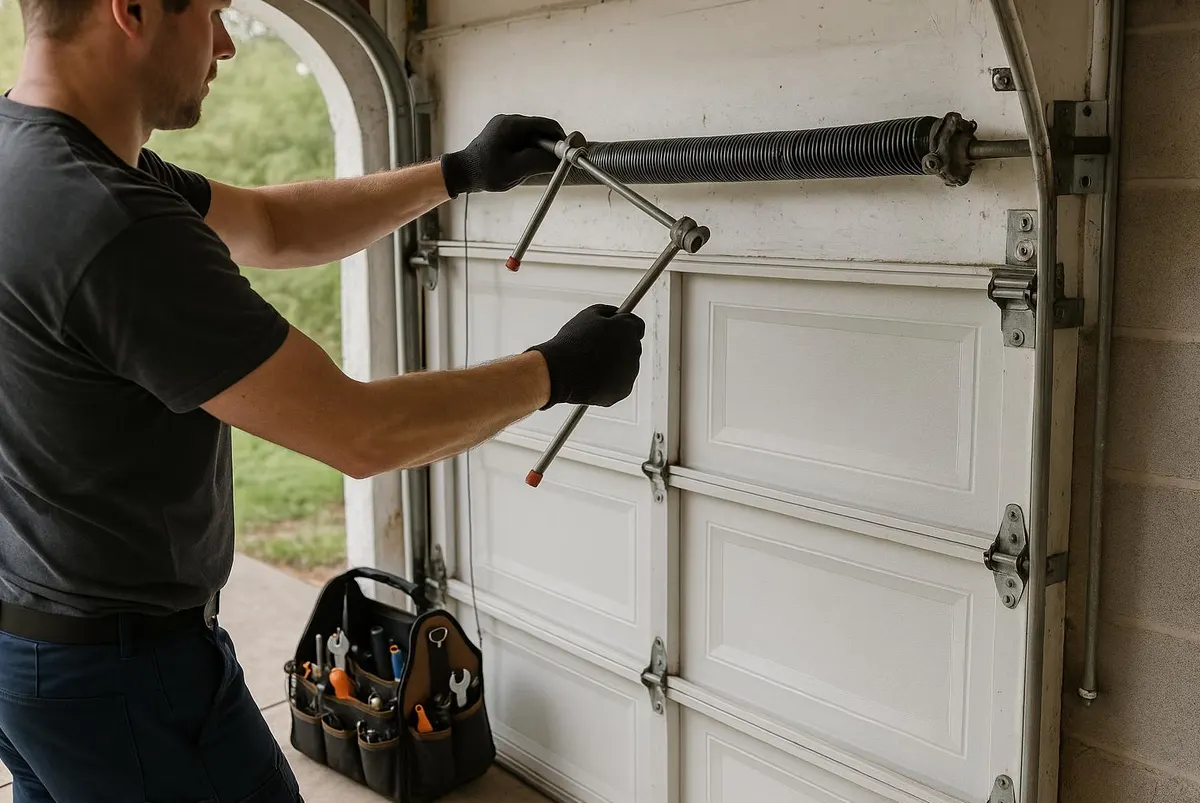
Torsion and extension springs lose a bit of tension and flexibility over time, and cold metal is more brittle than warm metal. A spring that's been slowly weakening all year is far more likely to fail outright once winter sets in. Watch for warning signs: the door feels heavier than usual when lifted manually, it doesn't stay open halfway on its own, or you hear a loud bang from the garage (often an early sign of a spring failing). Springs are under serious tension and are not a DIY repair — this is one job where professional spring replacement before winter is genuinely cheaper than an emergency call during a cold snap.
4. Test the Opener and Battery Backup
Cold weather is tough on batteries, including the backup battery in openers equipped with one. If you lose power during a winter storm, you want that backup actually working. Run a manual test: disconnect the opener from power for a minute and confirm the battery carries the door through a few open-close cycles. Also listen for any new grinding, hesitation, or delayed response — motors working harder against stiff, cold-weather resistance often show strain before they fail outright.
5. Address Rust and Hardware Wear Before It Spreads
After a summer of heavy rain and humidity, check hinges, tracks, and the bottom of the door panels for surface rust, especially on older doors. A wire brush and touch-up paint can stop small spots from spreading, but pitted or heavily corroded hardware should be replaced now rather than mid-winter when ice makes the garage floor and driveway harder to work around safely.
6. Think About Insulation if You Haven't Already
If your garage shares a wall with living space, or you simply use the garage as a workshop through the winter, an uninsulated door will let a lot of cold air through. Older homes in this area often still have the original single-layer door; retrofitting with an insulated door or adding insulation panels can noticeably cut down on how much icy air and drafts make it into the garage and the rooms next to it.
When to Call Herndon Garage Door
If your door feels heavier than it should, the opener is straining, or you spot a spring that looks stretched or uneven, that's the point to call rather than wait. Herndon Garage Door handles spring replacement and full garage door maintenance visits that check tension, lubrication, alignment, and weatherstripping in one trip — exactly the kind of once-a-year tune-up that prevents the 6 a.m. failure in January. If something does break down mid-winter, our emergency garage door service covers that too, with technicians who show up ready to work in the cold.
Don't wait for the first hard freeze to find out your door wasn't ready for it. Call Herndon Garage Door today to schedule winter maintenance for your home in Herndon, VA or the surrounding area.